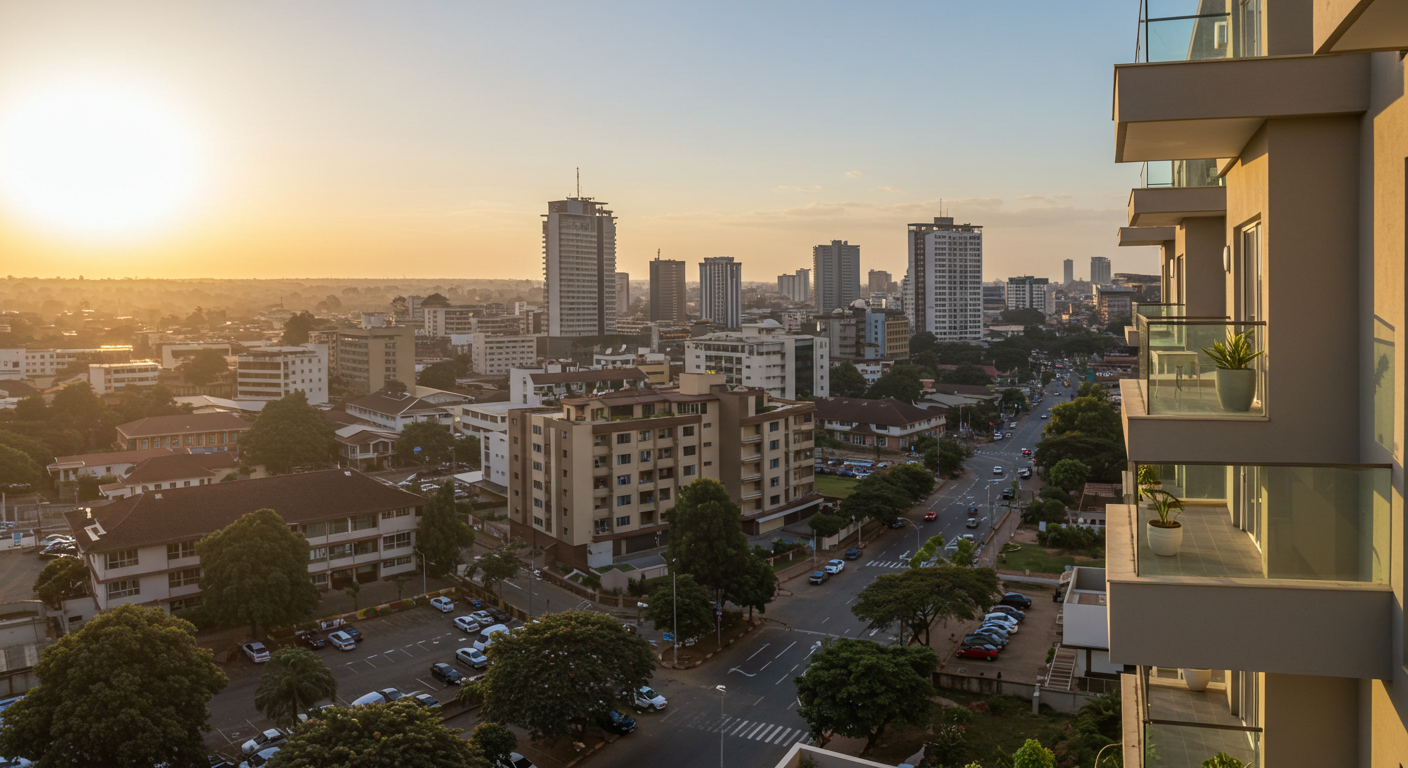
The commercial scene of Nairobi is changing from being the city’s traditional central business district under the weight of congestion and crazy overheads. In 2026, the digital economy has slowly migrated towards the north east to areas like Ruaraka. This area, historically characterised by heavy industry and logistics, is being reimagined as a prime spot for remote work. This transition is a response to the needs of modern business, where the ability to avoid traffic has become very important. While the allure of a coworking space in areas such as Riverside, Westlands and Kilimani remains significant for established corporate entities, the high-growth tech sector is increasingly finding its home in the industrial-hybrid spaces of Ruaraka.
The Structural Evolution of the Baba Dogo Corridor
The transformation of Baba Dogo Road is anchored by a new generation of industrial-commercial developments. Projects such as the Empire Business Park, situated on 9.5 acres, represent the leader of this movement. These developments offer 46 godowns with floor areas ranging from 7,530 to 11,696 square feet, but their true value lies in their hybrid architectural design. With eaves heights reaching 9 meters and mezzanine floors capable of supporting 500 kg per square meter, these structures are also being converted to tech hubs and creative studios.
The fact that institutional-grade land is now available, like the 5.8-acre parcel that Metro & Manor just released, shows that the area is moving away from inconsistent, speculative development and toward planned, prospective capital use. This particular piece of land, which has Baba Dogo Road frontage and a verified leasehold status, draws diaspora groups and institutional developers, who are interested in building workspaces. These modern workspaces can stay operationally reliable for remote work in Nairobi because they have all the necessary utilities, such as mains water, sewer, and power supply.
Comparative Infrastructure and Space Specifications
When comparing the physical environment of Baba Dogo’s hybrid spaces to traditional serviced offices, the difference is defined by a sense of spatial and operational liberty. Below are the key ways these industrial-inspired hubs empower your workday:
- Vertical Space:- Higher ceilings in the warehouse offer an aesthetic advantage over standard 2.8 m ceilings.
- Digital Connectivity: In an industrial area, there are preinstalled 2-core fibre to all units, ensuring dedicated, high-speed access that outperforms shared office networks in crowded districts.
- Logistical Ease: Baba Dogo Road is accessible via the Thika Superhighway and Outer Ring Road, which is against the primary grain of traffic, allowing professionals to avoid traffic.
- Utility Resilience: Water and electricity are consistent regardless of the city’s external utility pressures.
The Economic Competitive Edge
Diba Studios, Baba Dogo, the largest such facility in the Ruaraka district, offers coworking solutions starting at KSh 14,000 per month. These charges have allowed startups to allocate more capital to talent acquisition and product development.
Neighbourhoods surrounding Ruaraka, such as Roysambu, Garden Estate, and Mirema, provide a comfortable standard of living at a fraction of the cost in other areas adjacent to co-working spaces. This allows remote workers to maintain a comfortable lifestyle while significantly reducing their cost of living.
Lifestyle Amenities and Community Integration
Ruaraka has seen a rapid expansion of cafes and retail centres that facilitate networking crucial to the tech industry. The proximity to Garden City Mall and TRM provides remote workers with access to spaces like Artcaffe and Java House.
Diba Studios Baba Dogo provides standing desks, lounge areas, and outdoor terraces that cater to thenetworking need. The culture here is distinctly different from the corporate, polished feel of a traditional coworking space.
Sociological Perspectives on Remote Work
Moving to a collaborative work model has significant impacts on society. Testimonials from remote workers in Nairobi show that they are becoming more and more frustrated with the “performative presence” of traditional office life, where being “seen” is often more important than what you actually do. Ruaraka’s remote work culture is focused on getting things done, but it needs to be intentional about building community to fight the loneliness that many people who work from home report.
The “energy” of Nairobi – its malls, trendy restaurants, and ambitious entrepreneurs – is now fully present in the Ruaraka-Garden City axis. This area is perfect for freelance strategic consultants because it has the peace required for focused work, the energy required for networking, and the logistical power of Baba Dogo Road for operational scale.
The Remote Work Experience: Pro vs. Con Analysis
Here is how the Ruaraka corridor addresses common challenges:
- Potential for loneliness: Professionals mitigate this by securing a membership at Diba Studios for consistent social banter and creative energy.
- Higher Billable Hours: To solve this, remote workers utilise the area’s “third spaces,” maintaining an intentional separation of home and work at cafes like Artcaffe or Java House within Garden City Mall.
- High Overhead: This is solved by utilising business parks, which offer industrial-grade electricity.
- Local Market Access: Professionals stay ahead by the use of bypasses and counter-flow timings via Thika Road and the Outer Ring Road.
Synthesised Conclusion: A New Era for Nairobi’s Workforce
Baba Dogo Road, Ruaraka, has become known as Nairobi’s leading remote work hub due to a combination of technological advancement, economic necessity, and mature infrastructure. The Ruaraka corridor provides a stable and flexible alternative for the 2026 digital economy by offering industrial-hybrid spaces. This area makes sense for the high-growth tech sector because it offers a counter-flow commute and a 65% reduction in living and operating expenses.
Stakeholders are no longer speculative of the investment and presence in Ruaraka Baba Dogo; rather, they are critical to preserving a competitive advantage in Nairobi’s remote work environment. The corridor will firmly establish itself as the driving force behind Kenya’s future work culture as long as institutional capital keeps coming in and large-scale initiatives are completed. When a professional learns to use the Ruaraka advantage, they are not only working remotely but also more profitably.